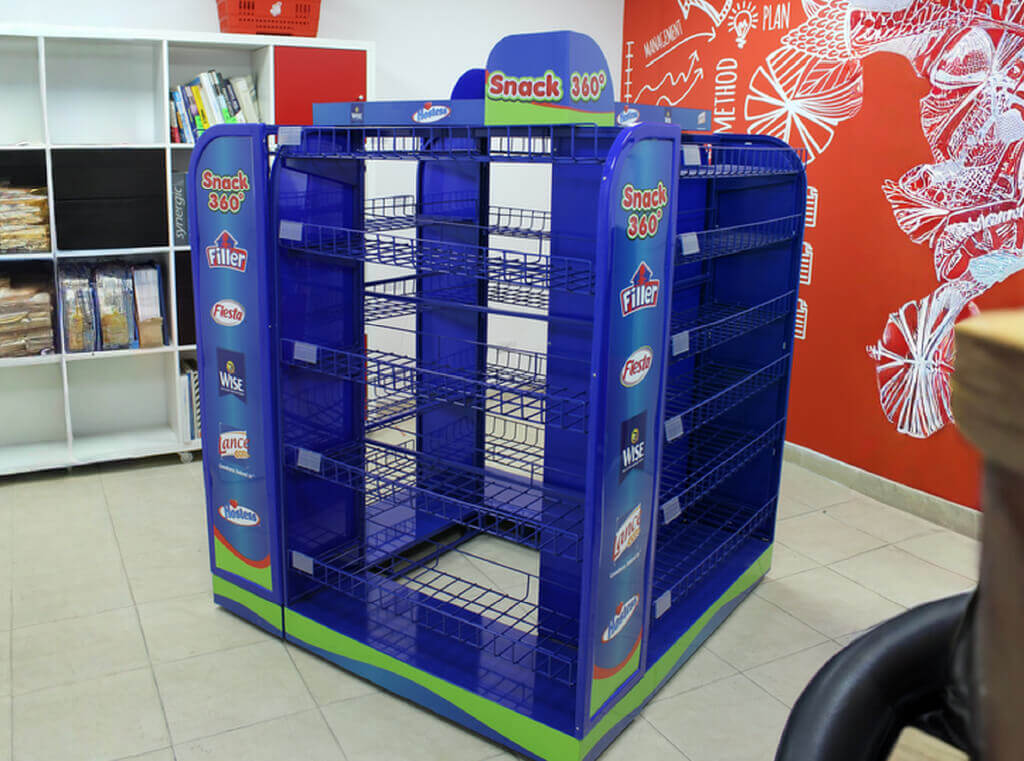
Retail media is the use of digital advertising and data-driven content within retail environments—both online and in-store—to influence shoppers at the point of purchase. It is revolutionizing digital marketing by connecting physical and digital channels, enabling targeted, measurable, and real-time brand engagement that drives higher conversion and sales.
Retail media is the use of data driven advertising inside retail environments, both online and in physical stores, to influence shoppers at the moment of purchase. It is reshaping digital marketing because it connects shelf and screen into one measurable channel, letting you reach a buyer who is already in the aisle with intent, not scrolling with none.
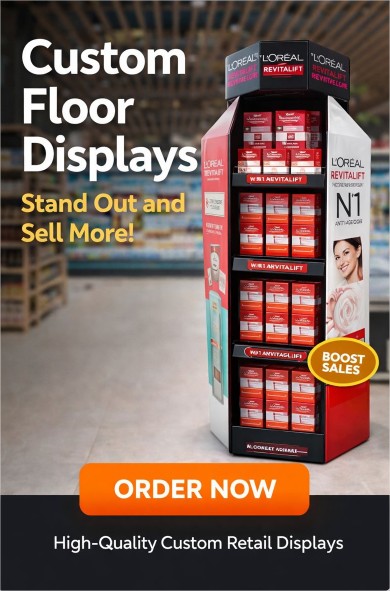
In the rapidly evolving world of retail, marketing strategies keep shifting. One of the most transformative movements gaining momentum is retail media, a discipline that is redefining how brands communicate with consumers and influence buying decisions across channels. And while much of the conversation happens on screens, the decisive moment still occurs in front of the shelf, where custom retail displays translate a media plan into something a shopper can actually reach out and touch.
What is retail media?
If you are wondering what is retail media in practical terms, it refers to the use of digital assets, retailer data and physical brand touchpoints within retail environments to increase engagement and drive sales. It covers a broad range of tools, from in store digital signage and custom retail displays to sponsored listings and personalized product placements on e-commerce platforms.
What makes it so powerful is its ability to connect physical and digital retail spaces in one cohesive, measurable system. You are no longer running two disconnected campaigns. You are running one conversation that follows the shopper from the app to the aisle.
Online retail vs in-store retail
To understand the impact, it helps to separate the two environments.
Online retail involves the sale of goods and services through digital platforms such as e-commerce websites, apps and marketplaces like Amazon or Walmart.com. It allows consumers to browse, compare and purchase from home, usually supported by algorithms that deliver tailored recommendations based on behavior.
In-store retail refers to traditional brick and mortar shopping, where customers interact with physical products, custom counter displays and staff in a tangible environment. This format offers immediacy and sensory engagement, but it historically lagged behind digital channels in personalization and targeted messaging. That gap is now closing fast.
What is a retail media network and how does it work?
A retail media network is the advertising platform a retailer builds on top of its own first party shopper data. Chains like Walmart, Kroger and Carrefour know exactly who buys what, how often and at what price point, and they sell access to that audience to the brands sitting on their shelves.
For an FMCG brand, this changes the negotiation completely. You are no longer buying impressions and hoping they reach a relevant shopper. You are buying placement against verified purchase behavior, and you can close the loop by measuring sales lift on the same SKU you promoted.

The part most brands underestimate is the physical layer. A retail media network can put your banner on the retailer’s app, but if the shopper arrives at an aisle where your product looks identical to the private label beside it, the media spend evaporates in the last meter. Digital targeting and physical visibility have to be planned together, not sequentially.
Custom Retail Display Manufacturers
Ready to boost in-store impact?
Let’s design a customized POP display that makes shoppers stop, look, and buy. From concept to production, we bring your brand to life at the point of sale.
Tell us your product, retail channel, and campaign timeline — we’ll recommend the best display format.
What you’ll get
- Display concept aligned with your brand
- Material & structure recommendations
- Production-ready plan and timeline
Retail media advertising: the formats that actually move product
Retail media advertising operates across three connected layers, and the strongest campaigns activate all three at once.
Onsite advertising covers sponsored product listings, banners and category takeovers within the retailer’s own e-commerce platform. It captures demand that already exists and converts at the highest rate.
Offsite advertising extends the retailer’s shopper data into social platforms and programmatic inventory, building awareness before the shopper enters the store or opens the app.
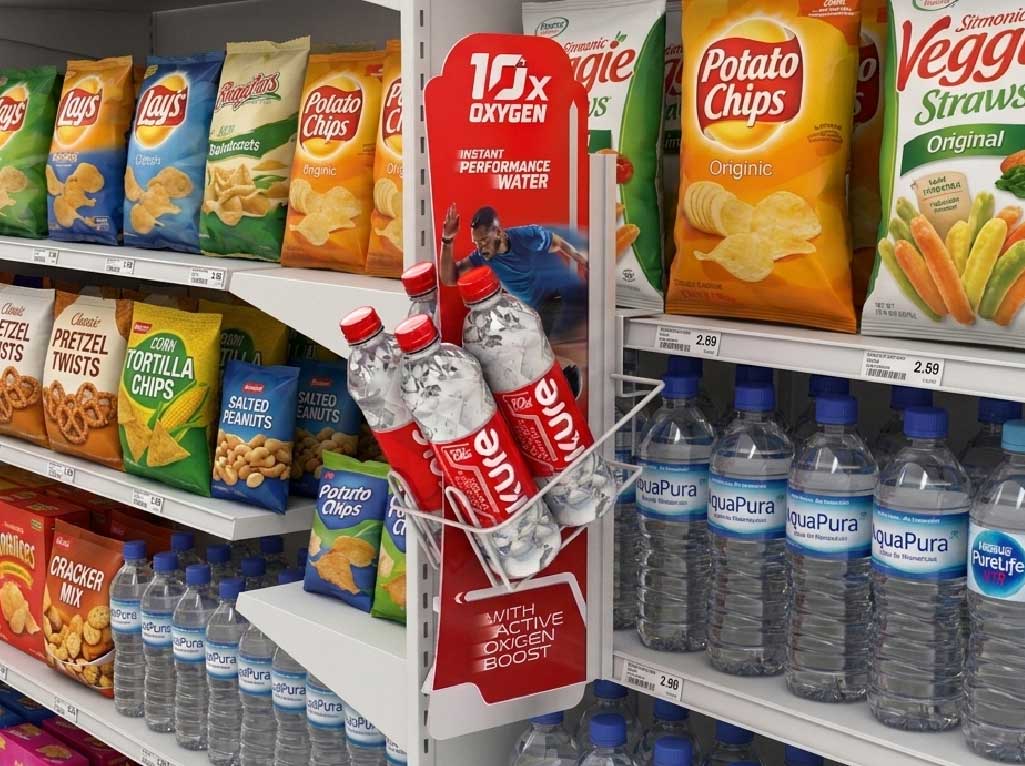
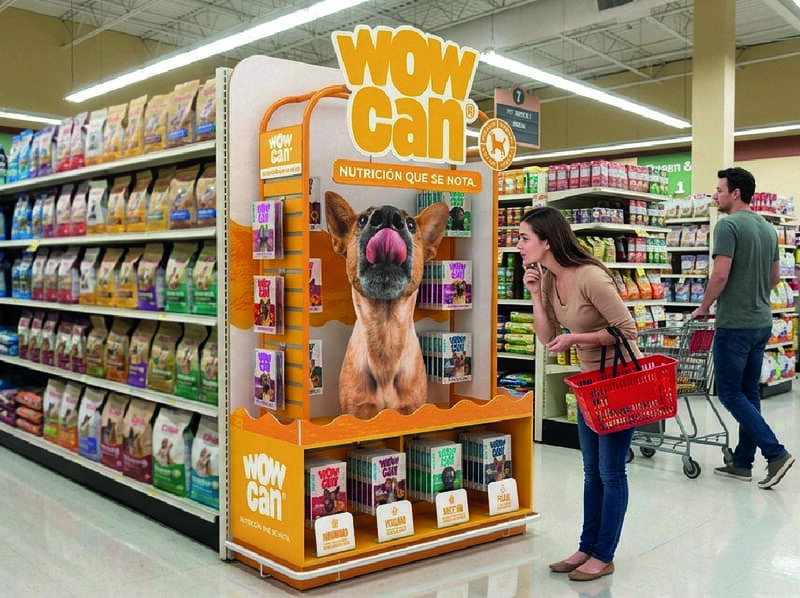
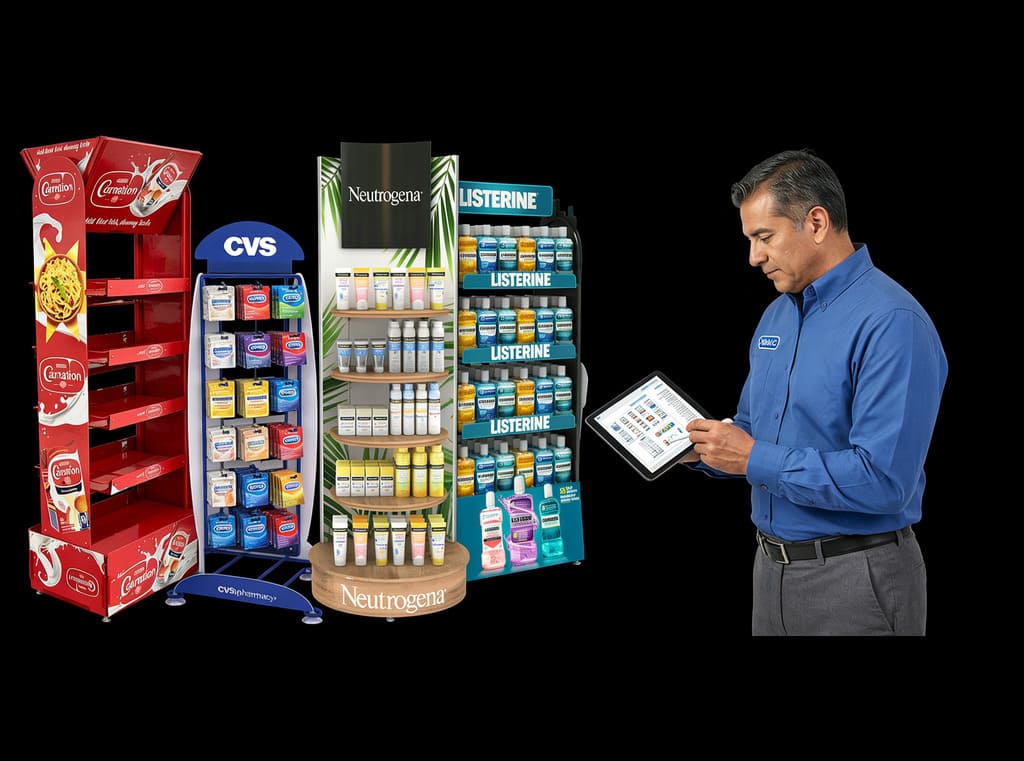
In-store advertising is where the decision happens. Digital signage, end cap displays, floor displays and counter displays intercept the shopper in the final meters of the journey. This is the layer with the shortest distance between message and purchase, and the one most often left out of the media plan.
Digital signage: the engine of in-store retail media
One of the most impactful formats within retail media is digital signage. This technology is transforming the in store experience by giving brands a way to communicate directly with customers through interactive, visually striking screens, from full video walls to compact displays showing product information, promotions and demos.
Its effectiveness lies in its ability to capture attention and deliver messages that resonate in real time. Product demos, customer reviews and time sensitive promotions all help build a memorable in store experience at the exact moment the shopper is deciding.
Industry data supports the shift. According to research published by PickCel, digital signage has been shown to increase retail sales by approximately 30 percent and improve ad recall by more than 50 percent, while around 70 percent of shoppers report that digital signage influences their purchasing decisions.
You may be interested in: Permanent vs temporary displays for retail: Which is better?
How to measure digital signage performance
Digital signage is not about putting screens in stores. It is about delivering results. You can measure performance by tracking viewer attention, interaction rates, dwell time near the display and conversion on the promoted SKU. Those insights let you optimize creative rotation and confirm you are reaching the right shopper with the right message at the right moment.
Retail media examples you can apply in store
These retail media examples show how the discipline works when it moves from theory to the sales floor.
A beverage brand runs sponsored listings on a supermarket app during a heatwave, then mirrors the same creative on a branded floor display at the store entrance. The shopper sees one message twice, in two contexts, and the association sticks.
A personal care brand uses digital signage near the category to run a product demo loop, paired with a custom counter display holding samples. The screen explains, the display converts.
A snack brand negotiates end cap space during a national campaign and syncs the display graphics with the retailer’s app promotion. Sales lift is then measured against a control group of stores without the display.
A new product launch pairs a temporary corrugated display for the first eight weeks with a permanent display once rotation is proven, protecting the investment while the category earns its space.

How to build a retail media strategy that connects shelf and screen
A functional retail media strategy is built in four steps.
Start by defining the decision moment you want to own. Awareness, consideration and conversion require different formats, and trying to solve all three with one display dilutes every one of them.
Second, align the creative across channels. The colors, claim and visual hierarchy a shopper sees on the retailer’s app should be immediately recognizable on the display in the aisle. Consistency is what makes two touchpoints feel like one campaign.
Third, plan the physical execution with the same rigor as the digital buy. Store format, aisle traffic flow, planogram restrictions and display durability determine whether your investment survives week three.
Fourth, measure at SKU level. Sales lift, rotation per store and cost per incremental unit tell you far more than impressions ever will.
Over more than twenty years developing point of sale solutions for consumer brands across international markets, we have seen the same pattern repeat. The campaigns that win are not the ones with the biggest media budget, but the ones where the display in the aisle finishes the argument the ad started.

LA BOULANGERE FLOOR DISPLAY

BRIANNAS FLOOR DISPLAY

BORGES FLOOR DISPLAY

Milo Floor Display

Fernleaf DUMP BIN DISPLAY

French Brioche Floor Display
Aligning retail media with e-commerce marketing
As shoppers move fluidly between online and offline, your physical retail efforts have to align with your digital campaigns. Integrating digital signage and custom retail displays with your e-commerce marketing creates a seamless experience that extends from the store to the screen and back.
You can use in store signage to drive traffic to your online catalog, promote exclusive online deals from the aisle, or reinforce a digital campaign with a physical display in the same week it launches. This cross channel approach lifts sales while strengthening recognition and loyalty.
Frequently asked questions about retail media
Is retail media the same as in-store advertising?
Not exactly. In store advertising is one component of retail media, which also includes onsite and offsite digital channels powered by retailer data.
Which brands benefit most from retail media?
FMCG brands competing in crowded categories, where the purchase decision is made in seconds at the shelf and differentiation depends on visibility.
How do you measure retail media performance?
Through sales lift on the promoted SKU, rotation per store, engagement with digital signage and cost per incremental unit sold.
Ready to turn your point of sale into a media channel?
Retail media is not a trend you can observe from the sidelines. Every month you delay, a competitor is buying the shelf space, the screen time and the shopper attention that could be yours.
The brands that win are the ones treating the store as media inventory rather than storage space. If your campaigns are already strong on screen but lose momentum in the aisle, the gap is not creative. It is execution at the point of sale, and that is a solvable problem.
Un apunte para la publicación: el enlace del segundo párrafo debe apuntar a la URL exacta de tu página de servicio de custom retail displays, y el enlace de “Permanent vs temporary displays for retail” a su post correspondiente. No las he inventado porque conviene que se enlacen las rutas reales del sitio.