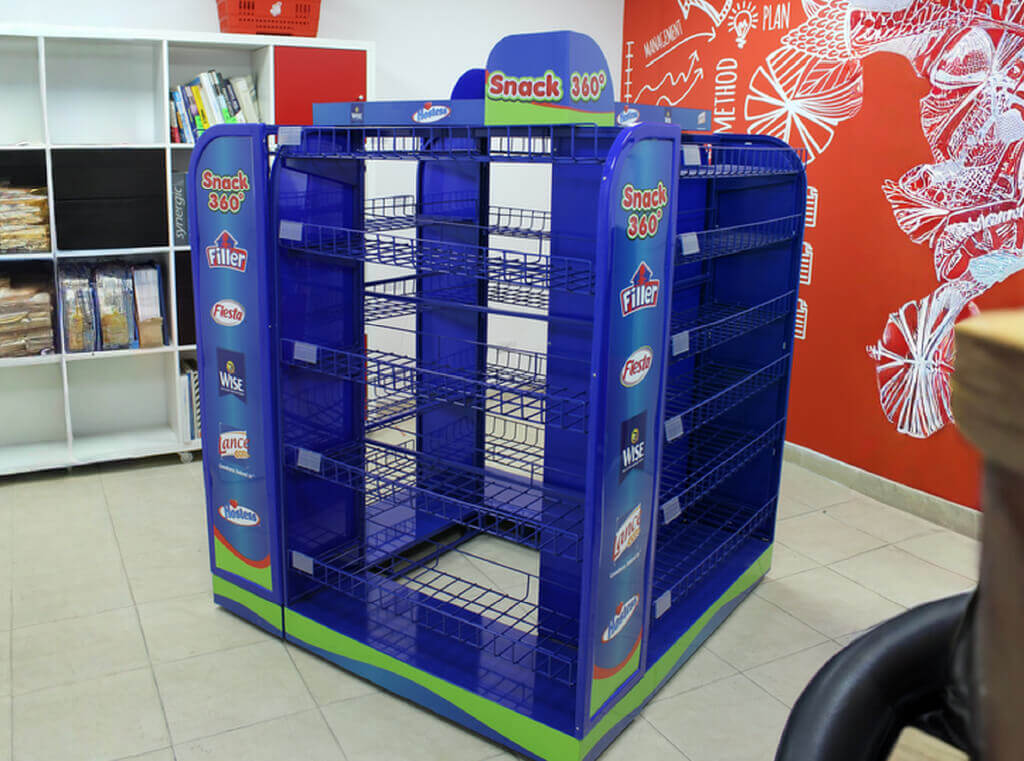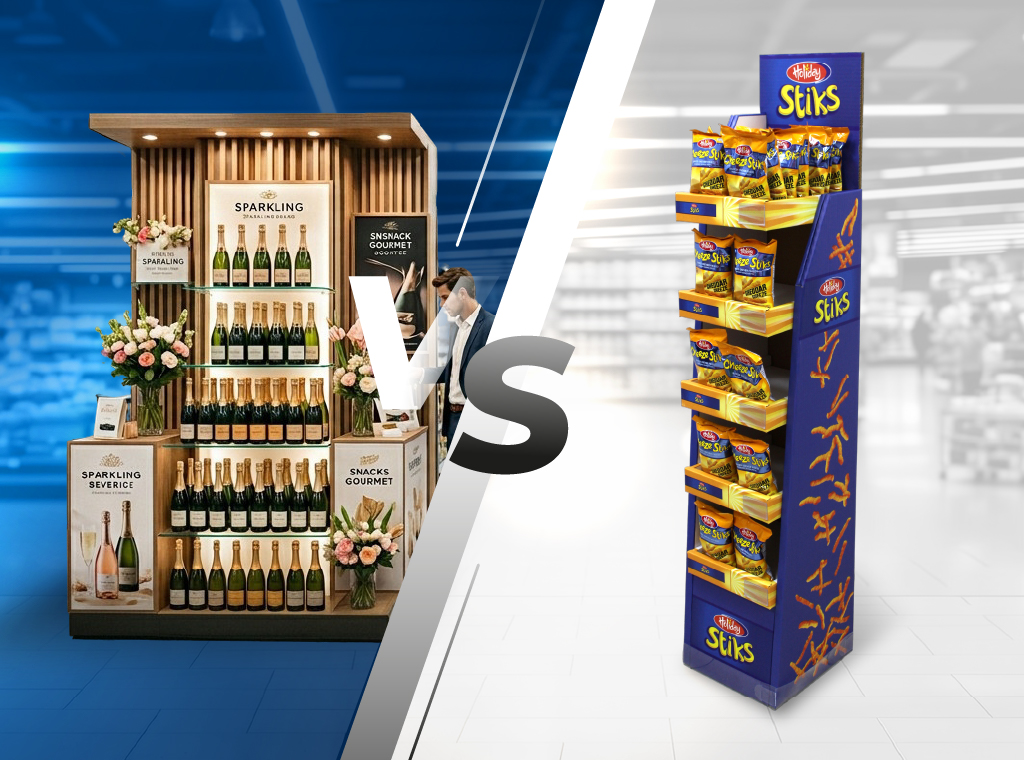
The most effective retail displays for beverage and snack brands are not the most visually complex — they are the ones built with a clear conversion strategy. The real lesson from high-performing FMCG brands is that the aesthetic display vs performance-driven display debate is not about choosing sides: it is about knowing when each approach serves the shopper and the bottom line. Brands that master this balance consistently outperform those that design for applause instead of action.
When a Display Looks Amazing But Nobody Buys
Walk into any modern supermarket and you will find it: a towering visually attractive retail display that stops people in their tracks. Colors are bold. The structure is immaculate. The brand story is there, layered in every detail. And yet, the sell-through numbers tell a completely different story.
This is one of the most common and costly mistakes in retail display design strategy for food and beverage. Brands invest in structures that win internal approval — the kind that looks stunning in a photo — but fails to translate visual impact into actual purchase decisions.
The beverage and snack category is brutally competitive at the point of sale. A shopper moves through an aisle in seconds. There is no time for a story that takes three steps to decode. In this context, retail display aesthetics vs performance is not a philosophical question. It is a revenue question.

LA BOULANGERE FLOOR DISPLAY

BRIANNAS FLOOR DISPLAY

BORGES FLOOR DISPLAY

Milo Floor Display

Fernleaf DUMP BIN DISPLAY

French Brioche Floor Display
What “Performance-Driven” Actually Means at the Point of Sale
A high-performing retail display strategy is not the opposite of beautiful. It is beautiful with a job to do.
Performance-driven design in retail display strategies for beverage brands starts with the shopper, not the brand. It asks: where does the eye land first? What triggers the hand to reach? How quickly does the product promise register? Every structural decision — height, angle, color blocking, product loading — is made in service of those answers.
Some of the most successful snack brand retail display examples in the market share a pattern: they use simple, legible visual hierarchies that guide the shopper from attention to action in under three seconds. They do not rely on narrative complexity. They rely on shelf impact vs visual storytelling in retail — a crucial distinction that many brand managers miss when briefing their display partners.
Point of sale display effectiveness is measurable. Sell-through rates, unit velocity, shopper dwell time — these are the real indicators of whether a display is working. And the data consistently shows that in-store displays for beverages and snacks that prioritize clear product visibility, easy restocking, and immediate brand recognition outperform their aesthetically ambitious counterparts.
The Aesthetic Trap: When Branding Becomes a Barrier
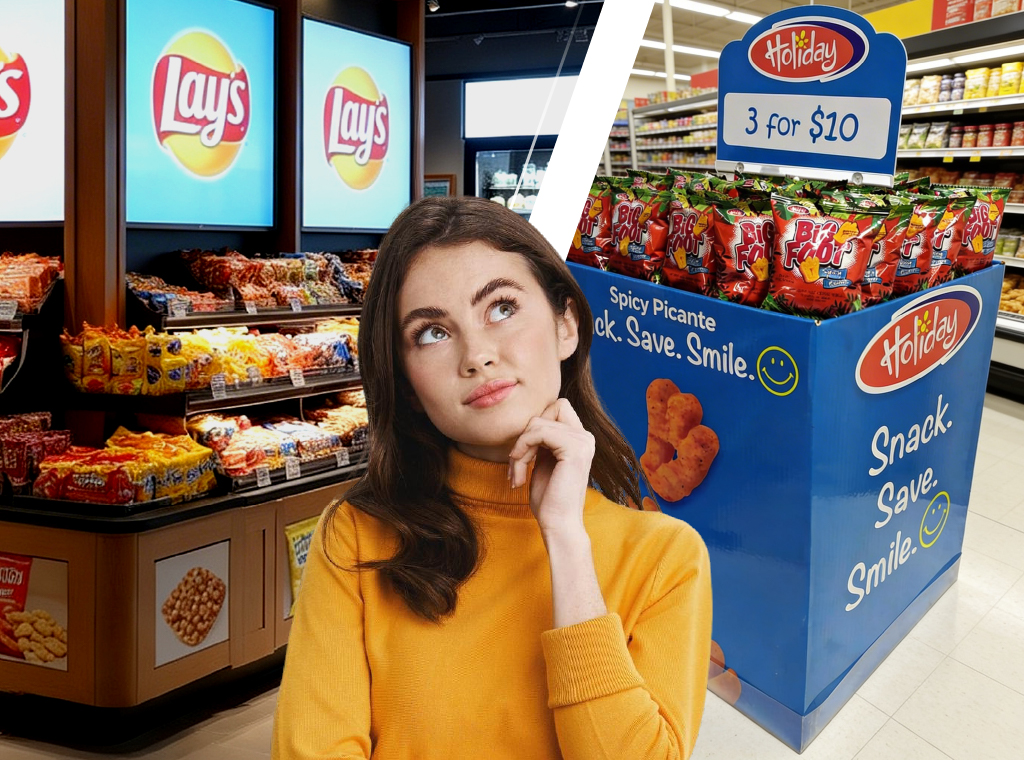
Branding vs conversion in retail displays is the tension that lives at the heart of every design brief. Brand teams want to tell a story. Sales teams want to move product. Both are right. The problem is when brand storytelling is designed in a way that slows down the decision.
In the beverage and snack category, consumer behavior and display design research is clear: shoppers in impulse-purchase mode respond to simplicity, familiarity, and immediate relevance. An overly elaborate aesthetic display that requires visual processing time is working against the very psychology it needs to activate.

This does not mean brand investment in display design is wasted. It means that how to balance aesthetics and performance in retail is a discipline that requires strategic thinking, not just creative execution. The brands that get it right understand that visual merchandising vs sales performance displays is a false binary — the best displays achieve both, but only when performance logic is baked into the design process from the start.
Lessons From the Shelf: What Beverage and Snack Brands Got Right
The brands winning in CPG display performance insights are not the ones with the most complex structures. They are the ones with the clearest design intent.
Three patterns emerge consistently across successful retail display case studies in the food industry:
First, in-store display optimization strategies that prioritize product loading and replenishment speed. A display that runs out of product or collapses under operational pressure is a performance failure, regardless of how good it looks on day one.
Second, impulse buying and display design alignment. The most effective displays for snack and beverage brands are positioned at high-traffic decision points — endcaps, checkout zones, cross-category placements — and designed with the impulse trigger in mind. Visibility from a distance, fast brand recognition, and a clear value message are non-negotiable.
Third, retail display ROI strategies that connect display design decisions to commercial outcomes. The brands with the best-performing fast-moving consumer goods display design are the ones that measure, iterate, and treat their display investment as a performance asset rather than a marketing expense.
Custom Retail Display Manufacturers
Ready to boost in-store impact?
Let’s design a customized POP display that makes shoppers stop, look, and buy. From concept to production, we bring your brand to life at the point of sale.
Tell us your product, retail channel, and campaign timeline — we’ll recommend the best display format.
What you’ll get
- Display concept aligned with your brand
- Material & structure recommendations
- Production-ready plan and timeline
Aesthetics Earns Attention. Performance Earns Revenue. You Need Both.
The lesson is not that beautiful displays are wrong. The lesson is that beauty without conversion logic is an expensive decoration.
What makes a retail display effective in the beverage and snack category is the ability to do two things simultaneously: stop the shopper and close the sale. That requires custom retail display design strategies that are built on shopper insight, tested under real retail conditions, and designed to perform across the full lifecycle of the display — not just on launch day.
Retail display design best practices always start with the question of intent. Is this display here to build brand equity over time, or to drive immediate purchase? In most cases, the answer is both — and optimizing retail displays for sales requires that both goals are served by a single, coherent design solution.
At Diforma In Store, we have spent over 20 years helping beverage and snack brands navigate exactly this challenge. Our approach to branded display performance improvement is grounded in the belief that the best displays are never accidental. They are the result of strategic design, deep shopper understanding, and manufacturing precision that translates creative vision into measurable retail display ROI strategies.
If your brand is ready to move beyond displays that only look good on a brief, point of purchase display optimization starts here.