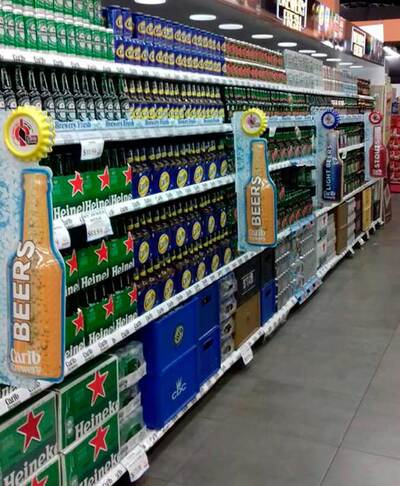
A shopper walks into a supermarket with a list of eight items and leaves with fourteen. The extra six weren’t luck. Something in the aisle caught their eye, gave them a reason to stop, and made the decision feel easy. For consumer brands, that moment decides whether a product sells, and it rarely happens by accident.
Shoppers still make a large share of their decisions inside the store, while they are standing in front of the shelf. Advertising can build awareness, but the final choice happens in the aisle, where your product competes for a few seconds of attention with dozens of alternatives. This article explains how in-store visibility works, what shapes it, and how to plan a program that gets results in real stores.
Why Great Products Still Get Overlooked on the Shelf
You can have the better formula, a competitive price, and a strong media campaign, and still lose at the shelf. The reasons are usually practical.
Aisles are crowded. A single category can hold hundreds of SKUs, many with similar colors, formats, and claims. Without a clear visual signal, your product becomes one more package in a long row.
Shoppers move fast. Most people scan a category quickly, often looking for a familiar color or shape rather than reading labels. If your brand isn’t easy to recognize at a glance, they skip it.
Placement isn’t guaranteed. Shelf space is negotiated, limited, and often assigned at eye level to category leaders. Smaller or newer brands frequently end up on bottom shelves or at the end of an aisle with little traffic.
Execution breaks down. A well-designed display can fail because it arrives damaged, takes too long to assemble, or ends up in a back corner of the store.
This is the gap many marketing, trade marketing, and shopper marketing teams face. The brand performs well everywhere except in the one place where the purchase happens.
So, What Is In-Store Visibility?
If you’ve been asking what is in-store visibility, here’s a clear definition. It’s how easily a shopper can notice, recognize, understand, and reach your product inside a physical store. It covers where the product sits, how it’s presented, what surrounds it, and how clearly it communicates its value in a short window of attention.
In-store visibility is a core part of retail merchandising, but it goes beyond arranging products neatly on a shelf. Strong visibility is planned. It takes into account the shopper’s path through the store, the retailer’s rules and space limits, the competitive landscape of the category, and the specific action you want the shopper to take.

Many brands think about visibility in terms of the First Moment of Truth, the few seconds when a shopper first encounters a product in the store and forms an impression. Packaging plays a role, but so does everything around it, including the display, the signage, the lighting, and the location. Together, these elements decide whether the product gets noticed or ignored.
The Elements That Shape What Shoppers Notice
Store layout and traffic flow
The store layout sets where people walk, where they slow down, and which areas they rarely visit. In most supermarkets and convenience stores, a few zones get far more exposure than others.
- Entrances and decompression zones, where shoppers adjust to the store and form first impressions.
- Main aisles and perimeter paths, which carry the most foot traffic.
- End caps, which face the main aisle and are seen by shoppers who never walk down the aisle itself.
- Checkout lanes, where every shopper passes and often waits.
Understanding the layout of the stores you sell through tells you where a display will earn attention and where it will go unnoticed. It also helps you choose the right format. A tall floor display may work well in a wide main aisle but block traffic in a narrow convenience store, where a counter unit makes more sense.
Point of purchase displays
Point of purchase displays give your product a second location outside its regular shelf, which increases the chances a shopper sees it. They interrupt the routine of the aisle and put your product in front of people at the moment they’re deciding what to buy.
Common formats include:
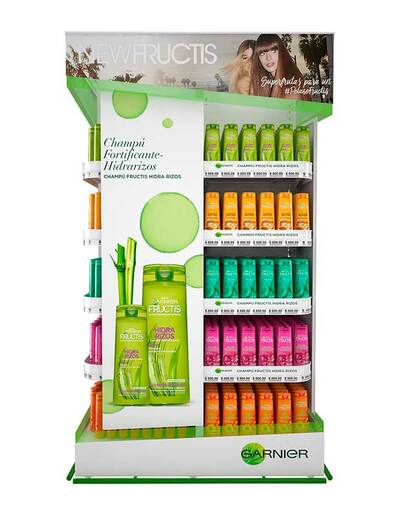
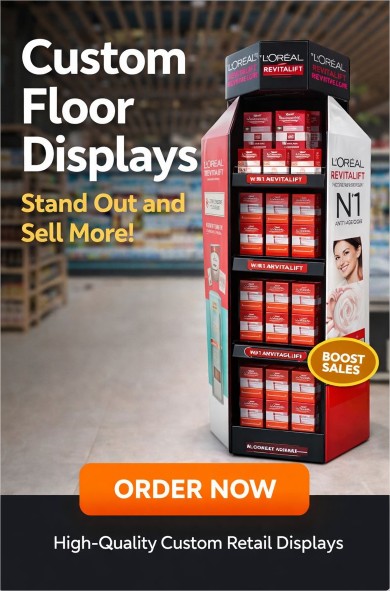
- Floor displays, free-standing units that hold product and carry strong branding in open areas.
- End-cap displays, placed at the end of a gondola, facing heavy traffic.
- Pallet and 4-way displays, large island formats that can be shopped from every side and suit high-volume promotions.
- Dump bins, open containers that invite shoppers to grab products and work well for snacks, toys, and seasonal items.
- Siderack displays, slim units attached to the side of a gondola that add exposure without taking floor space.
Each format solves a different problem. The right choice depends on the product size, the expected sales volume, the retailer’s space, and how long the display needs to stay in the store.
Point of sale displays
Point of sale displays sit near the register, where shoppers wait and impulse decisions happen. Counter displays and glorifiers work especially well for small, lower-priced items such as confectionery, gum, personal care products, batteries, and accessories.
At checkout, the decision takes seconds and the shopper has usually finished planned shopping. A compact, well-branded unit that shows the product clearly and makes it easy to grab can add incremental sales without competing with the main shelf. Premium brands also use glorifiers to give a single product a more elevated presentation, such as a fragrance, a premium spirit, or a consumer electronics item.
Signage, lighting, and brand cues
Shoppers often find brands by color and shape before they read a word. Consistent brand cues reduce the effort it takes to find you, which matters when someone is scanning a full category.
- 3D posters and premium signs add depth and draw the eye from a distance.
- In-aisle decoration such as shelf strips, wobblers, and headers creates a branded zone within a category.
- Lighting highlights the product and makes premium items look the part.
- Clear messaging communicates one main benefit quickly, without clutter.
The goal is to make your brand instantly recognizable and to give the shopper one clear reason to choose it.
Sampling and experiential touchpoints
Some products sell better when shoppers can try them. Sampling stands and trays let people taste, touch, or test a product in the store, which reduces risk for first-time buyers. For broader brand building, booths and experience centers create spaces where shoppers or trade partners can interact with the full portfolio. These formats are particularly useful for launches and for categories where trial drives conversion.
Shelf presence and in-store compliance
Even the best display fails if it’s half-assembled, out of stock, placed in the wrong spot, or removed early. Compliance is often the weakest link in a visibility program. Brands that plan for easy assembly, sturdy construction, and clear placement instructions get displays that look in the store the way they looked in the render.
Permanent or Temporary Displays and How to Choose
One of the first decisions in any visibility program is how long the display needs to last.
Temporary displays are built for short campaigns, such as seasonal promotions, holiday periods, or product launches. They’re usually made of cardboard, which is lightweight, printable, cost-effective, and recyclable. Cardboard also allows for creative shapes and full-color branding at scale.
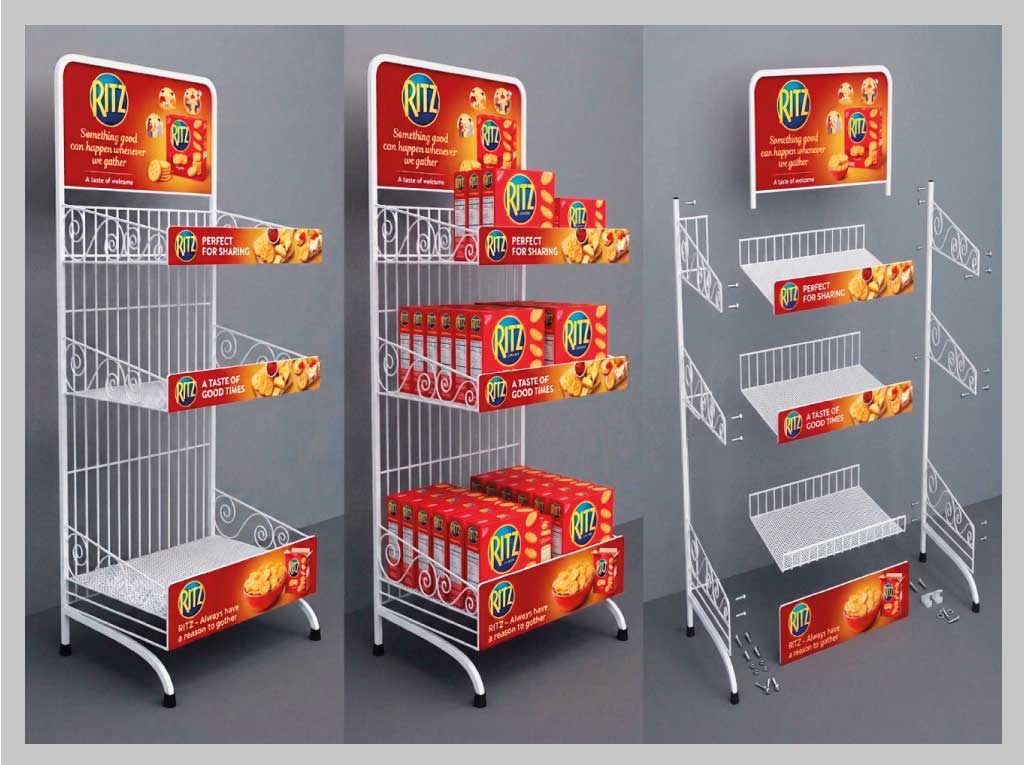
Permanent displays stay in the store for months or years. They’re typically made of metal, plastic, wood, or mixed materials, which handle daily use, restocking, and cleaning. They make sense for core products, premium positioning, or long-term agreements with retailers.
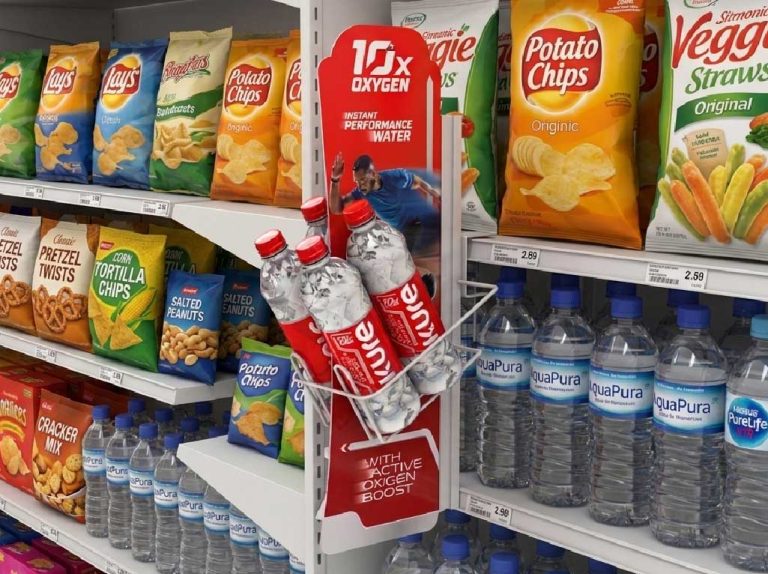
Some brands combine both approaches, using a permanent structure with interchangeable graphics that can be updated for each campaign. Choosing the right option depends on budget, campaign length, product weight, and the image the brand wants to project.
Cross-Merchandising and Secondary Placements
Visibility isn’t only about your own aisle. Cross-merchandising places your product next to complementary items, such as chips near salsa, batteries near toys, or sauces near the meat counter. This approach reaches shoppers who weren’t planning to visit your category and suggests a natural reason to add your product to the basket.
Secondary placements created through displays are one of the most effective ways to grow sales without changing your regular shelf position. A product that appears in two or three locations in the same store gets more chances to be seen and chosen.
What Strong Visibility Does for Your Brand
When it’s planned and executed well, in-store visibility delivers measurable commercial value.
- Wins secondary placements that put your product in front of more shoppers.
- Supports product rotation by making the item easier to find and pick up.
- Strengthens brand recall through consistent, recognizable presence across stores and regions.
- Captures impulse purchases in zones where shoppers make fast decisions.
- Supports launches by giving new products a visible starting point before they build shelf history.
- Gives retailers a reason to say yes, because a well-built display improves the store’s appearance and helps the category sell.
How a Visibility Program Comes Together
Effective visibility follows a clear process rather than a one-off production run.
- Brief and objectives. Define the product, the channel, the retailers, the timeline, the budget, and what success looks like. A strong brief includes product dimensions and weight, units per display, store formats, and retailer requirements.
- Concept and design. Creative and engineering teams develop proposals and renders that balance brand impact with structural integrity and retailer rules.
- Prototyping. A physical sample confirms structure, load capacity, assembly time, and appearance before mass production. This step prevents costly problems later.
- Manufacturing. Materials and production methods are selected to fit the campaign’s lifespan and volume.
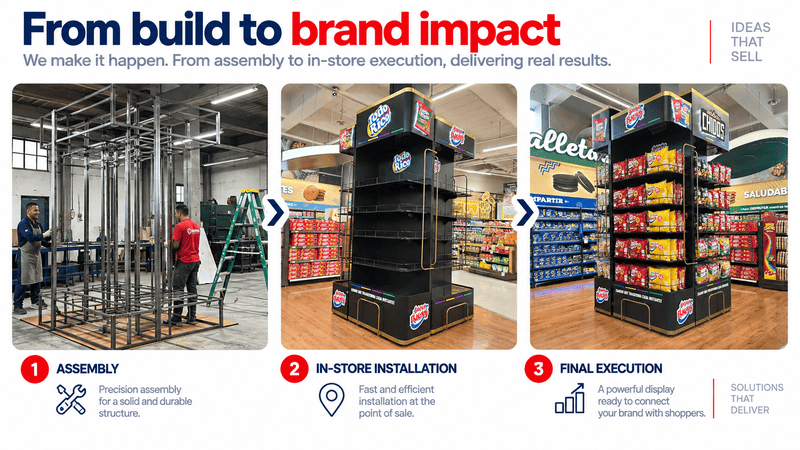
- Logistics and rollout. Displays are packed, shipped, and delivered to stores or distribution centers, often across several regions or countries. Flat-pack designs can greatly reduce shipping volume and cost.
- In-store execution. Easy assembly and clear instructions help store teams set up the display correctly and quickly.
- Review and optimization. Results are measured and lessons are applied to the next campaign.
How to Measure the Impact of In-Store Visibility
Visibility should be treated as an investment, and every investment needs measurement. Useful indicators include:
- Sales lift in stores with the display compared with stores without it, or compared with the same period before installation.
- Product rotation and sell-through rate during the campaign.
- Compliance rate, meaning the percentage of stores where the display was installed correctly and on time.
- Display lifespan, especially for permanent units.
- Cost per store, including production, freight, and installation.
Photo audits from field teams or merchandisers help confirm execution and show which store formats perform best. Over time, this data guides better decisions on format, materials, and placement.
Common Mistakes That Limit Visibility
- Designing without the store in mind. A display that ignores aisle width or retailer size limits may never get approved.
- Too many messages. Shoppers won’t read a long list of claims. One clear benefit works better.
- Underestimating product weight. Weak structures sag, collapse, or get removed.
- Complicated assembly. If store staff can’t set up the display quickly, it may stay in the stockroom.
- Ignoring logistics. Bulky displays increase freight costs and are easily damaged in transit.
- No follow-up. Without measurement, it’s hard to know what worked or justify the next investment.
What Sets an Experienced Display Partner Apart
Plenty of suppliers can build a display. Fewer can manage the entire journey from the brief to the aisle. Diforma In Store has spent more than 27 years designing and manufacturing displays for consumer brands, with more than 8,800 projects completed for over 500 clients in more than 18 countries, including work for brands such as KitKat, Milo, Durex, Pedigree, and Under Armour.
A few things make the difference in practice:
- Design and manufacturing under one roof, with a design and innovation center in Delray Beach, Florida, and an in-house manufacturing plant and distribution center in Bogotá, Colombia.
- Co-creation with your team, with proposals, artwork, and renders delivered on short timelines.
- Flat-pack solutions that ship disassembled and assemble in minutes, cutting freight costs for large rollouts.
- Flexibility in materials, from cardboard for temporary campaigns to metal, plastic, and mixed materials for permanent fixtures.
- Tariff advantages for the U.S. and Europe thanks to free trade agreements.
- Support from start to finish, from the initial concept to delivery and installation.
Common Scenarios Where Visibility Makes the Difference
- Product launches. A new SKU has no shelf history, so a dedicated display helps shoppers discover it and try it for the first time.
- Seasonal campaigns. Christmas, back-to-school, summer, and other promotional windows call for temporary displays that go up fast and come down cleanly.
- Multi-country rollouts. Brands selling across the U.S., Latin America, and the Caribbean need consistent execution with displays that travel well and assemble easily.
- Impulse categories. Snacks, beverages, confectionery, and personal care products benefit from checkout and end-cap placements.
- Premium positioning. Spirits, fragrances, and electronics use glorifiers and permanent displays to reinforce a higher-end image.
- Trade shows and activations. Booths, sampling stands, and experience centers put a brand’s portfolio in front of distributors, retail buyers, and consumers.
Practical Recommendations Before Your Next Campaign
- Start with the shopper’s path. Study the store layout before you choose a display format.
- Design for the retailer as well as the brand. Respect size limits, weight restrictions, and placement guidelines so the display gets approved and stays on the floor.
- Match material to lifespan. Use cardboard for short promotions and durable materials for long-term programs.
- Keep the message simple. One benefit understood in two seconds beats five claims nobody finishes reading.
- Plan for assembly and logistics. Flat-pack and modular designs reduce freight costs and installation time.
- Prototype before you produce. A physical sample saves money and avoids surprises.
- Measure and repeat. Track sales lift, compliance, and cost per store to improve every campaign.
Frequently Asked Questions
What is the difference between point of purchase and point of sale displays?
Point of purchase displays are placed wherever the shopper makes a buying decision, such as aisles, end caps, and open floor areas. Point of sale displays are usually located at or near the checkout, where the transaction happens and impulse purchases are common.
How long does it take to produce a custom display?
It depends on the complexity, materials, and volume. A clear brief, quick approval of renders, and an early prototype help shorten the timeline. Planning several weeks ahead of the campaign launch is always advisable.
Which material is best for a retail display?
Cardboard is ideal for temporary, high-impact campaigns. Metal, plastic, and wood are better for permanent displays that need to withstand daily use. Many programs combine materials to balance durability, cost, and appearance.
Turn Every Aisle Into a Selling Opportunity
Shoppers decide quickly, and the brands that show up clearly in those few seconds are the ones that get chosen. A well-planned in-store visibility strategy brings together the store layout, the right display format, durable materials, and solid execution so your product gets noticed, considered, and bought.
If you’re planning a launch, a seasonal promotion, or a regional rollout, Diforma In Store can help you design and build the displays to support it. Request a proposal and share your brief, and our team will come back with concepts designed for your product and your retailers.