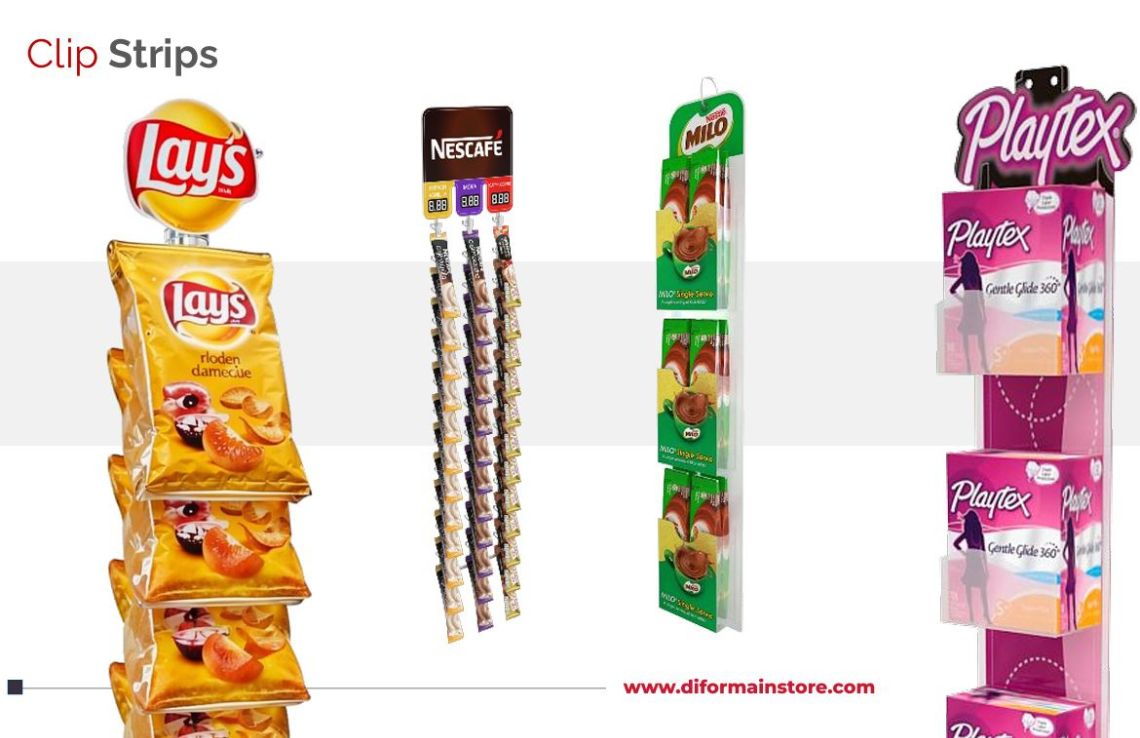
Floor displays influence buying decisions by capturing attention at the exact moment shoppers are open to discovery. Their impact comes from how design, placement, and psychology work together to guide behavior without interrupting the shopping flow.
Why Floor Displays Are Not “Just Another Fixture”
In physical retail, every element competes for a shopper’s limited attention. Floor displays sit at a critical intersection: they are not part of the permanent architecture, yet they are impossible to ignore when designed correctly. Understanding the psychology of floor displays means recognizing that shoppers don’t experience stores logically they experience them emotionally and visually first.
At Diforma In Store, floor displays are conceived as behavioral triggers. They don’t shout promotions; they invite interaction. When a shopper pauses, looks down, or subtly adjusts their walking path, the display has already done part of its job.
How Shoppers Actually Behave in Front of Floor Displays
Real-world retail studies consistently show that shoppers make most decisions in-store, often in seconds. This is where shopper behavior floor displays become decisive. Shoppers rarely read first; they scan. They respond to shape, contrast, height, and spatial positioning long before messaging enters their conscious mind.
A well-designed floor display aligns with natural walking rhythms. It respects personal space while creating curiosity. Instead of forcing engagement, it rewards attention. This balance is critical for effective retail display psychology, where subtlety often outperforms excess.
Visual Attention Happens From the Feet Up
Unlike wall or shelf displays, floor displays operate in a unique visual zone. They intercept peripheral vision and redirect it upward. This is central to visual attention in retail displays.
The human eye is trained to detect anomalies in familiar environments. A floor display that contrasts with surrounding fixtures without breaking brand coherence creates a visual pause. That pause is the gateway to interaction. When the design uses clean geometry, controlled color, and intentional negative space, the shopper’s brain categorizes it as “worth noticing.”

LA BOULANGERE FLOOR DISPLAY

BRIANNAS FLOOR DISPLAY

BORGES FLOOR DISPLAY

Milo Floor Display

Fernleaf DUMP BIN DISPLAY

French Brioche Floor Display
Interaction Is a Psychological Agreement
Shoppers don’t interact with displays because they are told to; they interact because the display makes psychological sense in the moment. Consumer interaction with floor displays depends on perceived effort versus perceived reward.
If a display looks cluttered or overly complex, the brain categorizes it as work. If it looks intuitive, approachable, and purposeful, interaction feels natural. This principle is fundamental to in-store behavior and displays: the easier it is to understand what to do, the more likely shoppers are to engage.
Design That Guides, Not Pushes
Effective floor displays don’t rely on aggressive messaging. They rely on guidance. Directional cues, modular structures, and open access points subtly suggest how a shopper should move around or through the display.

This approach reflects advanced consumer psychology in retail displays, where the goal is to reduce cognitive friction. Shoppers feel in control, even though their behavior is being gently influenced by layout and form.
A strong example of this philosophy can be seen in our Floor Display 360° project, where structure and visibility work together to create engagement from multiple angles without overwhelming the shopper.
Emotional Context Drives Decision-Making
Shopping is not a neutral activity. Mood, time pressure, and environment all affect decisions. Floor displays that align with emotional context perform better than those that simply present products.
This is where shopper behavior and floor displays intersect with storytelling. Materials, finishes, and proportions communicate quality, accessibility, or innovation before a single word is read. In retail display psychology, emotion always precedes rational evaluation.
Custom Retail Display Manufacturers
Ready to boost in-store impact?
Let’s design a customized POP display that makes shoppers stop, look, and buy. From concept to production, we bring your brand to life at the point of sale.
Tell us your product, retail channel, and campaign timeline — we’ll recommend the best display format.
What you’ll get
- Display concept aligned with your brand
- Material & structure recommendations
- Production-ready plan and timeline
Why Placement Is as Important as Design
Even the best-designed display fails if placed incorrectly. Floor displays must exist where decisions naturally happen: transitions between aisles, category borders, or points of hesitation.
Understanding shopper behavior floor displays requires mapping movement, not just space. Displays that interrupt flow create resistance. Displays that integrate with flow create engagement. This strategic placement reinforces in-store behavior and displays as a system, not isolated elements.
Consistency Builds Trust at Floor Level
Shoppers subconsciously evaluate whether a display “belongs” in the store. Consistency in brand language, materials, and proportions reinforces trust. When a floor display feels aligned with the retail environment, interaction increases.
This is a key insight from retail display psychology: familiarity reduces skepticism. A display doesn’t need to blend in completely, but it must feel intentional. Our Concept Floor Display Mexana demonstrates how conceptual design can remain coherent within a larger retail ecosystem.
The Role of Simplicity in Attention Retention
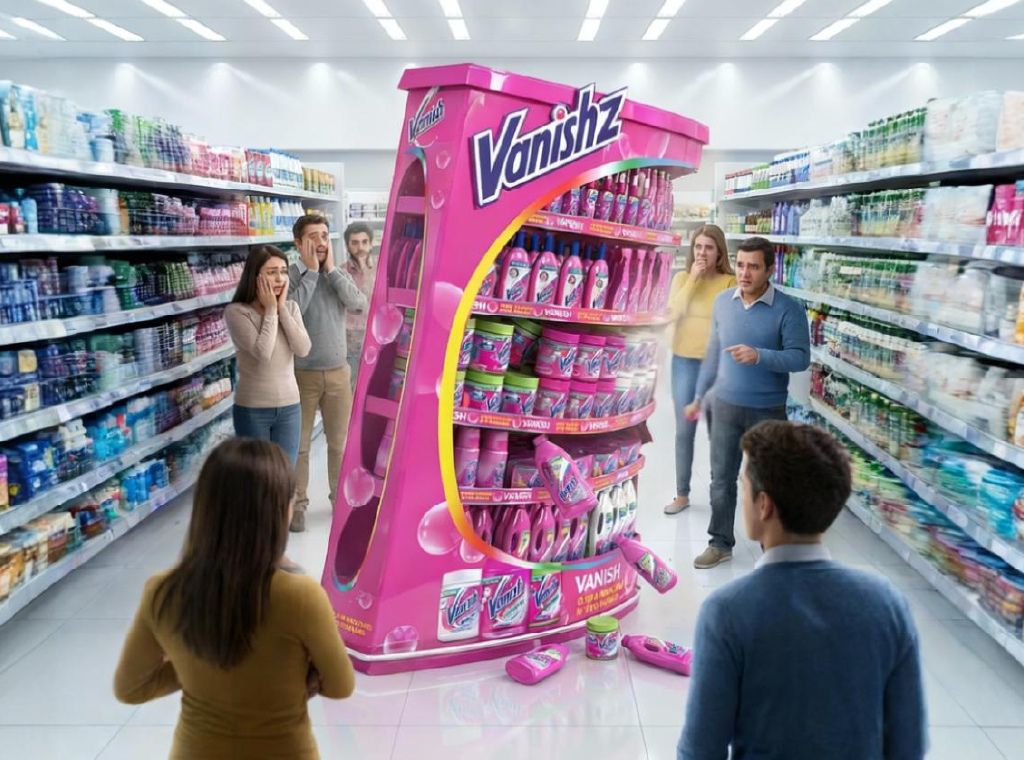
Complex displays may attract initial attention, but simplicity sustains it. Shoppers engage longer with displays that present a clear visual hierarchy. One focal point, one message, one action.
This principle directly supports visual attention in retail displays. When the brain doesn’t need to filter excess information, it stays present. Simplicity is not minimalism for its own sake—it is respect for how people actually process space and information.
Floor Displays as Silent Sales Strategists
At their best, floor displays work without explanation. They support brand goals, guide behavior, and enhance the shopping experience without interrupting it. This is the essence of psychology of floor displays applied professionally.
They are not decoration. They are behavioral tools. When design decisions are grounded in consumer psychology in retail displays, the result is measurable impact: longer dwell time, higher interaction, and stronger brand recall.
Designing With Behavior, Not Assumptions
The biggest mistake in retail display design is designing for how we think shoppers should behave, rather than how they actually do. Floor displays succeed when they respect real human behavior—imperfect, emotional, and fast.
By understanding consumer interaction with floor displays and applying those insights through thoughtful design, brands create experiences that feel natural and persuasive at the same time. This is where strategy, psychology, and design converge to turn physical space into a competitive advantage.